It’s no secret that politics impacts academia. But that does mean the role of the college president – and the stakeholders they must please – is constantly evolving.
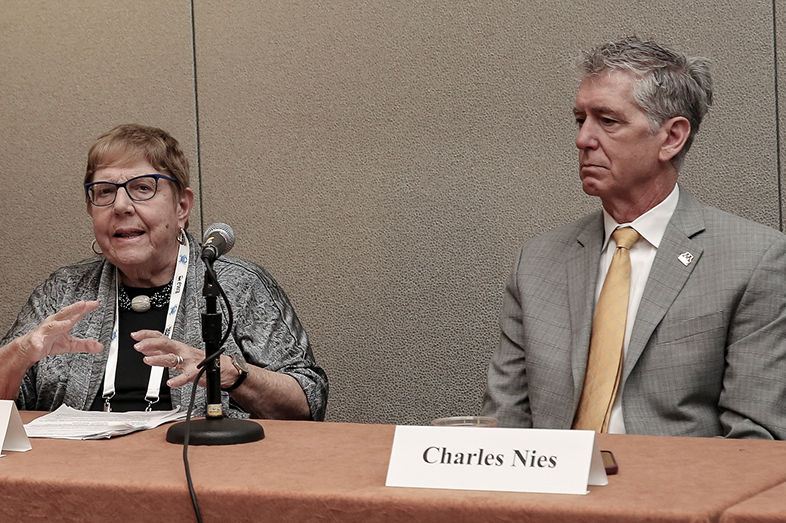
At the Education Writers Association’s 2026 National Seminar in Baltimore last June, speakers discussed how postsecondary education leaders navigate pressure and cut through political noise.
Here’s an explainer on the evolving role of university leaders and how reporters can best cover them.
Participants
Harrison Keller, president of the University of North Texas, former commissioner for the Texas Higher Education Coordinating Board
Elaine Maimon, higher education columnist at The Philadelphia Citizen, former Governors State University president
Charles Nies,chancellor of University of Minnesota Duluth
Eric Kelderman, senior writer, The Chronicle of Higher Education (moderator)
Given the increasing pressure to reform and the ever increasing price of higher education, university presidents are now also charged with restoring the public’s trust in its value, filling budget holes created by cuts to federal funding and research dollars, and navigating changes to tuition policies for students without legal status and international student visas.
The Role of a College Leader
College leaders serve as the face of their institution, which means they must raise money, represent the university, spread its message and set a strategic vision.
Innovation is key to a president’s job, as well as engaging all stakeholders around the university mission, said Harrison Keller, from the University of North Texas.
Leaders are also charged with prioritizing the allocation of university resources and being good stewards of the public’s money and support, Minnesota’s Charles Nies said.
Presidents also have tonavigate many competing demands. From research to student interests, accreditation responsibilities and workforce demands, presidents have to make sure the institution is positioned to meet multiple needs at once, Nies said.
The Pressures Presidents Face
Leading without tenure: Presidents do not have the job protection that tenure affords to many faculty members, Keller said. Despite this, presidents must focus on their vision for higher education rather than acting to please people.
Building trust: The political critiques of higher education aren’t all noise and shouldn’t necessarily be dismissed, Keller said. To restore public trust, university leaders need to ensure degrees give students a positive return on their investment and prepare them for success in the workforce.
Addressing community tensions: At the University of Minnesota Duluth campus, leaders are constantly in conversation with and listening to neighbors and community members to understand tensions, such as in research that could take place on border land, Nies said, including tribal reservations.
Demonstrating public good: Some pressure comes from the “myth” that faculty aren’t innovating or focusing on student success, Keller said, but that’s not true. As president, his job is to show the public that the university is committed to the public good, he said. He cited productive conversations with faculty on university changes and reform.
Communicating effectively: Former college leader Elaine Maimon warned that presidents should avoid getting in the weeds of increasing viewpoint diversity and instead emphasize the importance of keeping politics out of the classroom. Rather than focus on or the transactional return on investment, she said, “What we really need to communicate is the transformational nature” of higher education.
Responding to the Politicization of Higher Education
Nies said universities must preserve academic freedom and free pursuit of educational ideas, as well as productive debate and civil discourse
Find the silver lining to policy changes, Keller suggested. When political actions force institutions to examine their practices, such as Texas’s review of courses and degree programs mandated by the 2025 higher education reform law Senate Bill 37, they should do so with a critical lens and use it as an opportunity to become more mission-aligned, he said.
Being clear about expectations and changes to come is also important, as well as addressing faculty’s fears about outside forces affecting their teaching, Keller said.
With outside parties, focus on the common good provided by universities and ask people about their own experiences in higher education to lower tensions, Keller said.
Story Ideas
How do university leaders articulate their vision? Look at strategic plans and talk to faculty and students about their thoughts on the vision.
What motivates a president’s decision-making?
Are presidents acting within a new law’s bounds or “overcomplying”? If it’s the latter, what’s driving that approach and how is it impacting the university?
How are presidents navigating funding pressures from the federal government?
How are presidents articulating the common good and value of higher education?
School board races, controversial ballot measures and youth voters are on Votebeat’s radar. Learn how to cover the midterms from the outlet’s editorial director.
Amid enrollment declines and federal changes, an editor explains a new rural college rankings system and shares tips for reporters covering higher education in rural America.