Reporting Guide: Property Taxes and Public Education
This SciLine resource is a primer to help journalists explain research on the potential impact of proposals to cut or eliminate local property taxes.
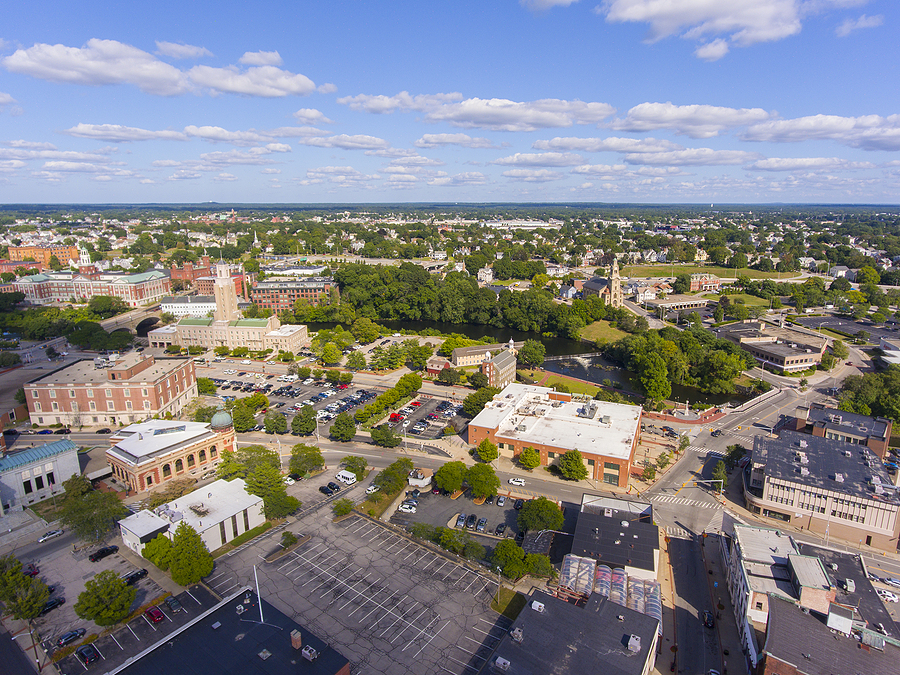
Photo credit: Jiawangkun/Bigstock
This SciLine resource is a primer to help journalists explain research on the potential impact of proposals to cut or eliminate local property taxes.
Photo credit: Jiawangkun/Bigstock
This article was republished from SciLine at the American Association for the Advancement of Science. (Note: The author serves on the EWA board of directors.)
In the lead-up to the 2026 midterm elections, policymakers and political candidates across the U.S. have pushed to cut or eliminate property taxes as families and small businesses wrestle with rising costs amid a faltering economy.
In many communities, the conversation has centered on K-12 public schools—how education spending has contributed to rising property taxes and how local schools would be impacted by a significant or complete loss of funding from a key revenue source. Nearly 40% of public school revenue nationwide comes from property taxes, according to a 2024 report from the National Center for Education Statistics that examines education finances from academic years 2010-11 to 2020-21.
Taxing real estate helps local governments pay for public services such as law enforcement, libraries, parks, and road maintenance. However, public education is often the largest and most expensive public service funded by property taxes. And the cost of providing free schooling from kindergarten through 12th grade has continued to climb.
In 2021, 39% percent of local governments’ direct general fund spending went toward public education, a report from the nonprofit Urban Institute shows.
Local property tax systems can be complicated in structure and in the burden they bear in relation to other types of taxes that governments rely on for revenue. We created this guide to help journalists access and understand what scientific research shows about the potential impact of plans to reduce or abolish property taxes.
Economist Andrew Reschovsky says journalists would do a tremendous public service by explaining to their audiences how local governments determine the value of individual properties, set property tax rates, and use property tax proceeds.
He notes that accurate, nuanced news coverage grounded in scientific research will be critical to helping residents follow policy debates and recognize misinformation when they encounter it.
“It’s easy for misinformation to get spread,” says Reschovsky, professor emeritus of public affairs and applied economics at the University of Wisconsin-Madison. “It’s part of the job of the journalist to understand the system well enough to explain it.”
Property tax bills have spiked in many parts of the U.S. over the past several years, frequently driving up the cost of renting and maintaining homes during a national housing affordability crisis.
From 2019 to 2024, the median annual bill for property taxes on single-family homes jumped more than 50% in Colorado and Georgia, 47.5% in Florida, and about 44% in Indiana, Alabama and South Dakota, according to an analysis from the property data analytics firm Cotality.
Nationwide, the median bill grew 27.4% during that period to $3,018 a year, the analysis shows. Most of that growth was due to inflation, however.
A range of factors have contributed to tax increases in different parts of the country, but inflation and cuts in state and federal aid play a primary role. In many places, local governments have raised property taxes to help cover the rising cost of such things as utilities, equipment, road repairs, employee salaries, health insurance, and specialized services for public school students with disabilities.
Public school spending across the U.S. grew from $13,187 per student in fiscal year 2019 to $17,619 in 2024, Census Bureau data show.
Property tax increases have spurred what some news outlets and other organizations are calling a “property tax revolt.” Earlier this year, multiple states ordered changes aimed at reducing residents’ tax burdens. For example, in May, Iowa Gov. Kim Reynolds signed into law a property tax reform bill projected to save homeowners there $4.2 billion over six years.
As of early July, a total of 11 states had either cut or capped the amount of money local governments can collect with property taxes, the nonpartisan, nonprofit Center on Budget and Policy Priorities reports.
Other states will probably follow. At GOP state conventions in Texas, Idaho, and Indiana in June, Republican party leaders called for the elimination of property taxes. Texas Gov. Greg Abbott has made repealing the portion of property taxes that funds public schools a central issue in his reelection campaign.
At least seven other states — Florida, Georgia, Louisiana, North Carolina, Oklahoma, Tennessee and Wyoming — plan to ask voters this fall to weigh in on ballot measures that would alter local tax policies or prevent legislators from establishing a statewide property tax.
Government officials and researchers use a lot of jargon when they talk about public finance. Here are some of the common terms journalists need to know:
To learn more of the basics, check out a few of the free webinars and explainer videos that various government agencies and nonprofit groups offer to educate the public about property taxes. The Lincoln Institute of Land Policy, a nonprofit, nonpartisan foundation and leading authority on property taxes, has created several short videos, including “Property Tax 101: The Mechanics.” The Institute on Taxation and Economic Policy, a nonprofit, nonpartisan policy organization, offers a short written explainer, “How Do Real Property Taxes Work?”
Scientific researchers have studied property taxes and public finance for many decades. But be aware that researchers’ findings often apply only to the state or area they studied. It is difficult to study property tax issues at a national level because states differ so much from one another in terms of their property tax policies, populations, economies, and other factors.
Research to date suggests:
Researchers at the Lincoln Institute of Land Policy reviewed three decades of research on property taxes and found that property taxes are a more stable source of funding for public schools during recessions than sales taxes and state aid. “The stability of the property tax makes it particularly well-suited to funding K-12 education, a public service with high fixed costs, that cannot be rapidly scaled down without detrimental effects on quality,” they write in a 2021 paper on the topic.
The researchers also conducted case studies of four states where, between 1989 and 2018, officials cut or abolished property taxes and then tried to replace the money public schools had been receiving with additional state aid or a higher general sales tax. A main takeaway of that analysis, which focuses on Kansas, Michigan, New Hampshire and South Carolina: Sales taxes and state aid were less predictable revenue sources and tended to fall short of budgetary expectations during economic downturns.
Multiple studies in recent years demonstrate bias in the methods property assessors use to assign values to homes. Higher-income households benefit from this bias, finds a 2022 working paper from the Federal Reserve Bank of Philadelphia. “A homeowner whose house is worth $100,000 faces an effective property tax rate that is approximately 20% greater than a homeowner whose house is worth $1,000,000,” writes the author, who analyzed data for about 150 million properties nationwide from 2005 to 2019.
A paper published in June in the National Tax Journal finds that this type of bias is common nationwide. “In our sample of 9,091 municipalities, we find that the vast majority (92.3%) have at least mildly regressive assessments,” the researchers note. They also determined that homestead exemptions of a certain size can counteract this bias. The median value of the exemption would need to be $24,639 to do that, they estimate.
When researchers analyzed data for 9 million homes across 49 states from 2003 to 2016, they discovered that effective property tax rates were 13% higher for homeowners who identified as Black or African American and 10% higher for those who identified as Hispanic or Latino, on average. The differences were largest in the most racially segregated areas, the researchers explain in a 2022 paper published in The Quarterly Journal of Economics. They indicate that property assessment appeals may figure into these assessment gaps. While conducting a case study of Cook County, Illinois, which includes Chicago, they noticed that Black and Hispanic homeowners were less likely to appeal their assessments and less likely to win an appeal, compared with white, non-Hispanic homeowners.
A paper released Aug. 1 describes the results of a statistical model that researchers built to examine the role of property taxes in reallocating housing. A surprising pattern emerged when researchers doubled the property tax rate in a hypothetical area designed to mimic conditions in California, where property taxes remain relatively low because of mandates imposed under Proposition 13, a state constitutional amendment. Homeownership rates rose among adults aged 25 to 34. Meanwhile, the share of bedrooms owned by people aged 75 and older dipped, indicating some of these homeowners downsized.
California voters passed Proposition 13 in 1978, partly to prevent homeowners from being taxed out of their homes. It forced dramatic tax policy changes, including limiting property taxes to 1% of a property’s assessed value. Researchers learned that doubling the tax rate in the hypothetical scenario “has a slight negative impact on homeownership overall, but results in a large reallocation of housing across generations,” they write. “Households under [age] 65 gain a larger share of the total owned housing stock overall. By contrast, older households, those above [age] 65, see declines in homeownership of 6.2 percentage points, or 9.2%.”
When U.S. public schools spend an additional $1,000 per student per year over four years, high school graduation rates rise an average of 2 percentage points and college-going rates increase 2.8 percentage points, on average, according to a 2024 paper in the American Economic Journal: Applied Economics. Test scores improve very slightly, researchers note in their analysis, which synthesizes data collected from 31 studies on the topic published or released during the previous two decades.
We consulted three researchers with deep expertise in tax policy and education finance to create this reporting guide. When we asked them for tips on how to improve news coverage of property tax issues and avoid errors, they shared this advice:
Like K-12 public schools, community colleges in 29 states also rely on property tax revenue, says Zyrashae Smith-Onyewu, an assistant professor of higher education at the University of Florida. But much of the public probably does not realize that because news stories about property taxes and education funding tend to focus on public K-12 schools, she says.
Community colleges, as a whole, get more money from local governments than they collect in student tuition and fees, suggests a 2022 report from the Community College Research Center at Columbia University. The majority of local government funding comes from property taxes.
“It’s important that we don’t underestimate how important property taxes are,” says Smith-Onyewu, the lead author of a first-of-its-kind analysis on community college funding that appeared earlier this year in the Education Finance & Policy research journal.
In the paper, she and her colleagues note that a growing share of community college revenue comes from local funding sources. “In all,” they write, “the proportion of community colleges’ total revenues that are received from local sources varies widely, ranging from less than 1% to more than 50%.”
Property tax stories tend to be numbers-heavy and require journalists to do math, such as calculating changes in tax rates and revenue. A common math error: Confusing “percent change” and “percentage-point change.”
News stories sometimes mistakenly refer to a median number as the mean. Remember that the median is the middle number in a set of numbers that has been sorted from smallest to largest. The mean is the mathematical average of a set of numbers. To calculate the mean, add up the values of all the numbers in the set and then divide their sum by the number of numbers in the set.
Reschovsky, the economist, points out that some journalists make this common, but incorrect, assumption.
“Rising values don’t necessarily lead to higher taxes,” he explains, adding that various factors affect local government decisions about whether and how much to change property tax rates.
When property values go up, government officials may actually lower tax rates to collect the same amount of money, or a little more, than they did the previous year.
Keep in mind that local governments in some states set different tax rates for different types of property. In those places, tax bills could potentially fall for homeowners but rise, drop, or stay the same for people who own commercial property, such as coffee shops, hotels, strip malls, and office buildings, or industrial property, which includes factories, data centers, warehouses, and food-processing plants.
Reschovsky notes that some residents may not know that local businesses help shoulder the property tax burden. In many states, business owners pay property taxes on their land and buildings as well as on assets known as tangible personal property, which can include office furniture, inventory, manufacturing equipment and agriculture machinery. Businesses pay an estimated 42% of property taxes nationwide, the Tax Foundation, a nonpartisan, nonprofit policy organization, notes in a 2025 report.
Tax law scholar Dorothy Brown says journalists play an important role in helping government leaders find solutions to societal problems. News coverage can inform policy debates by calling attention to new ideas, scientific research, and initiatives that have shown promise in other contexts or locations.
When it comes to public education funding, communities need solutions-focused coverage, says Brown, who is the Martin D. Ginsburg Chair in Taxation at Georgetown Law.
“We know the current system leaves children behind—disproportionately poor and/or minority school children,” Brown wrote in an email. “How to fix that? Is it with alternative local funding sources? Is it with increased support from the federal government? Is it something else that researchers have proposed … but have not gotten enough attention [for]? That’s where the media plays a key role—increasing awareness of innovative solutions.”
Here are three story ideas that journalists can localize for their audiences:
In 2021, President Joe Biden’s administration created a task force charged with eradicating racial bias in the processes local governments use to assign values to homes before taxing them. When President Donald Trump took office in 2025, his administration blocked the policies that the Interagency Task Force on Property Appraisal and Valuation Equity had introduced.
Brown, the tax law professor, encourages journalists to investigate property assessment bias in their areas. She urges them to also examine their local property tax appeals processes to look for evidence that some types of property owners are more likely to challenge their assessments and win appeals.
“Just because a tax is ‘colorblind’ on its face, doesn’t mean it isn’t racially discriminatory in effect,” notes Brown, who wrote the 2022 book “The Whiteness Of Wealth: How the Tax System Impoverishes Black Americans — and How We Can Fix It.”
“Tax issues almost always have a racially disparate impact and contribute to the racial wealth gap—but are often assumed to be issues that only impact the richest among us,” she wrote in an email. “Nothing could be further from the truth.”
Brown suggests journalists read the 2024 book on property taxes, “The Black Tax: 150 Years of Theft, Exploitation, and Dispossession in America,” written by University of Virginia historian Andrew W. Kahrl.
Smith-Onyewu, the higher education scholar, worries about how community colleges that rely on property taxes would handle a significant or total loss of that funding. Program cuts and tuition hikes at community colleges, known for their affordability, would likely prevent some students from finishing their studies, she says.
“Community colleges are, historically, a gateway into higher education and the workforce,” explains Smith-Onyewu, who has written several papers on community college funding in recent years as part of the research team at InformEd States, a national clearinghouse for information on state higher education funding policies.
Cutting community college funding would “hurt first-generation and lower-income students in so many ways and take away so many options that are available to them currently,” she adds. “I’d just like to see people think more about that.”
High schools could be impacted by those cuts, too. Each year, millions of high school students take courses at their local community college for free or at a discount through dual enrollment programs. More than 1 in 5 community college students are dually enrolled high school students, according to the Community College Research Center.
As journalists evaluate proposals to reduce or eliminate property taxes, Reschovsky suggests they also examine options for improving local tax policies and processes. He recommends asking residents what they do not like about the tax.
“There often is a specific reason, and there often are ways to make the property tax into a better tax,” he says.
A report that Reschovsky co-authored, “Rethinking the Property Tax-School Funding Dilemma,” outlines a dozen recommendations for improving local property tax systems and public education funding. One of them: Use circuit breaker programs to provide relief to homeowners whose property tax bills are high relative to their income.
In recent years, various researchers, policy analysts, government administrators, and other experts have shared their own ideas. A few examples:
These are some of the organizations that provide reliable information on property taxes or its role in funding K-12 public schools and community colleges.
Census Bureau: A federal government agency that collects and shares data on a wide variety of public policy topics, including state and local tax revenue. It conducts the Annual Survey of School System Finances and the Annual Survey of State and Local Government Finances.
Center for Municipal Finance: A University of Chicago research center that focuses on government finance issues at the state and local level.
Edunomics Lab: A Georgetown University research center that studies K-12 education finance.
Government Finance Research Center: A research unit at the University of Illinois Chicago that focuses on a broad range of topics related to government finance.
InformEd States: A national clearinghouse for research and information about higher education funding in individual states.
Lincoln Institute of Land Policy: A nonprofit, nonpartisan private foundation that studies land policy issues, including property taxes. It maintains a free, searchable database of information about property tax systems in each state and the District of Columbia from 1980 to 2023.
National Center for Education Statistics: A federal government agency that collects and shares data on various topics related to K-12 education and higher education in the U.S.
Urban-Brookings Tax Policy Center: A nonprofit, nonpartisan research organization that focuses on federal, state and local tax policy. Major news outlets have described it or its parent organizations as left leaning or centrist, but it is not affiliated with a political party.
Denise-Marie Ordway was most recently managing editor of The Journalist’s Resource at Harvard’s Shorenstein Center on Media, Politics and Public Policy. Prior to that role, she reported on property tax issues and education funding for many years at the Orlando Sentinel and The Philadelphia Inquirer. Since 2019, Ordway has served on the national Education Writers Association’s board of directors.



Your post will be on the website shortly.
We will get back to you shortly