Changing K-12 School Vaccination Requirements
Here’s research to help journalists report on strategies to increase childhood vaccinations as the political divide in Americans’ attitudes toward vaccines widens.
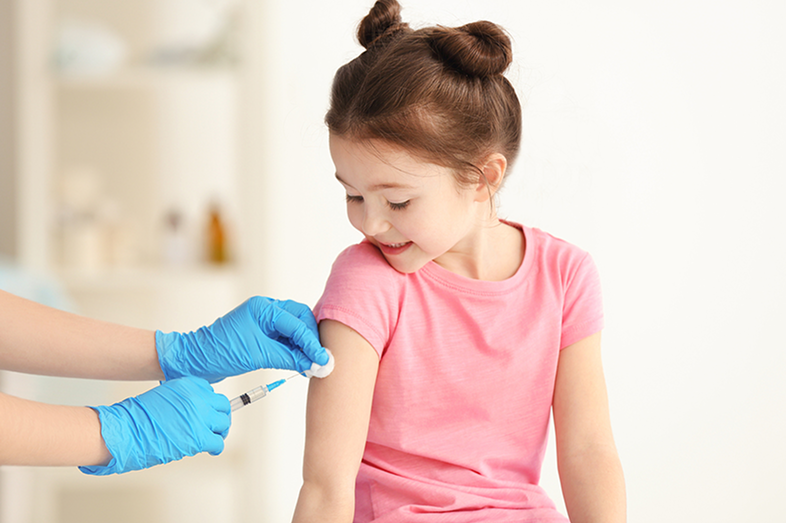
Photo credit: Yastremska/Bigstock
Here’s research to help journalists report on strategies to increase childhood vaccinations as the political divide in Americans’ attitudes toward vaccines widens.
Photo credit: Yastremska/Bigstock
This article was republished from The Journalist’s Resource. (Note: The author serves on the EWA board of directors.)
The COVID-19 pandemic disrupted routine childhood vaccinations across the U.S., reducing the percentage of children entering kindergarten immunized against serious, highly contagious diseases such as the measles, diphtheria and polio. Since then, vaccination rates have continued to fall, partly because many states now allow kids to skip immunizations that were required in prior years.
Public health officials warn that communities do not have herd immunity against a disease until a large proportion of the people who live in, work in and visit the area are immune. The measles, for example, is so contagious that at least 95% of the population needs to receive both doses of the measles vaccine to prevent transmission, according to the U.S. Centers for Disease Control and Prevention.
About 92.5% of kids who started kindergarten during the 2024-25 school year had received the MMR vaccine, which protects against the measles, mumps and rubella, the CDC estimates in its most recent report on the topic. About the same proportion were immunized against polio. Meanwhile, 92.1% had received the DTaP vaccine, which protects against diphtheria, tetanus and acellular pertussis.
David Higgins, an assistant professor of pediatrics at the University of Colorado Anschutz, notes that national averages for vaccination rates mask variations in vaccination coverage across local communities. In an interview with SciLine in August, he points out that an outbreak of measles in West Texas last year spread rapidly through communities with lower vaccination rates.
Nearly 800 people contracted the disease, 99 of whom were hospitalized, the Texas Department of State Health Services reported in August. Two children, a 6-year-old girl and an 8-year-old girl, died.
“The vaccination rate at your own school or community is much more meaningful than what the national vaccination rate is,” Higgins told SciLine, which helps reporters find reputable scientists to interview.
The U.S. had declared the measles to be eliminated in 2000. But as childhood vaccination rates dropped, the disease reappeared. The CDC confirmed a total of 2,065 cases of measles in 2025, up from 285 cases in 2024 and 59 cases in 2023.
Cases of pertussis, commonly known as the whopping cough, also have increased. Provisional data show that 35,493 cases of pertussis were reported to the CDC in 2024 — more than five times as many as in 2023.
Researchers have spent decades studying strategies that encourage people to get vaccinated. Many of these studies focus on schoolchildren and the ways that local schools, community centers and other organizations can help families overcome the various barriers they face in getting kids all doses of the vaccines their state mandates for school attendance.
In July 2024, editors at the leading scientific journal Nature urged policymakers to consult academic research to determine which interventions work best.
“The burgeoning science of vaccine-uptake effectiveness is throwing up some unexpected results that could help public-health authorities to sharpen their policies — and save more lives,” the editors write in the editorial.
Studies published in recent years suggest these four strategies help improve child vaccination rates. Toward the bottom of this article, we provide detailed summaries of key papers that examine these interventions.
Communication scholar Dolores Albarracín says schools send families mixed messages about the importance of childhood vaccinations when they allow lots of kids to skip immunizations. In Idaho, for instance, families can request vaccine exemptions for any reason. Statewide, 15.4% of kindergartners there were exempt from immunization requirements during the 2024-25 academic year, CDC data show. The exemption rate exceeded 9% in Alaska, Arizona, Oregon and Utah.
Nationwide, 3.6% of kindergarteners — some 138,000 kids — obtained exemptions from at least one state-mandated vaccination in 2024-25. That’s up from 3.3% the prior year.
Albarracín, who is director of the Communication Science Division at the University of Pennsylvania’s Annenberg Public Policy Center, has studied vaccination policies. A paper she coauthored, published in Nature’s Scientific Reports in December 2023, suggests vaccination policies can alter social norms and change people’s attitudes toward vaccines.
Like the American Medical Association and American Academy of Pediatrics, Albarracín supports eliminating vaccine exemptions that are not directly tied to a student’s medical condition.
“How can schools be trying to really ensure [vaccination] if, at the same time, they’re allowing parents to not vaccinate kids for all these personal and religious reasons?” she tells The Journalist’s Resource.
Children must be vaccinated against certain communicable diseases to attend school in the U.S. School vaccination mandates vary by state but generally apply to both public and private K-12 schools, including charter schools and parochial schools.
Schools generally require kids to get these four vaccines before enrolling in kindergarten:
All states allow exemptions to these requirements, according to the National Conference of State Legislatures, which tracks student immunization policies. As of July 2025, every state provided exemptions to students for medical reasons such as having a weakened immune system or being allergic to a component of a required vaccine.
Religious exemptions are common, too. Most states offer them. Meanwhile, 15 states grant exemptions if parents object to immunizations for personal reasons, the National Conference of State Legislatures reports.
In 2015, California banned all exemptions not tied to a medical issue, becoming the first state in almost three decades to do so. At the time, only West Virginia and Mississippi prohibited non-medical exemptions.
In 2019, New York and Maine eliminated religious exemptions, followed by Connecticut in 2021.
Various groups have challenged such policies, however. In 2023, a federal judge in Mississippi sided with several parents who argued that not being able to forgo state-required vaccines on religious grounds violated their First Amendment rights. The court ordered Mississippi, known for its high MMR vaccination rate among kindergarteners, to begin offering religious exemptions.
In November, a circuit court judge in West Virginia ruled that families there should be allowed religious exemptions. But the state Supreme Court temporarily suspended that ruling, pending an appeal by the West Virginia Board of Education, the West Virginia Watch reports.
Epidemiologist Sarah Michels says states could boost vaccination rates quite a bit by focusing on children who have started a vaccine series but not finished it. Michels has conducted national studies of infants and toddlers and found that many are just one or a few doses away from being fully vaccinated.
This is relevant because most doses of the four vaccines schools require are generally administered to children before age 2.
“Most families choose to vaccinate their infants and children, and what we saw is that more than 1 in 6 kids are missing doses,” says Michels, a former epidemiology specialist at the University of Montana’s Center for Population Health Research.
A study she led, published in Pediatrics in 2023, suggests the main reason more young children are not immunized is because of barriers families face in accessing vaccines and not because they fear or object to vaccines. For lower-income families, it can be difficult to make time or afford transportation to vaccination clinics and medical offices.
“We found that moving across state lines, higher numbers of children in the household, lacking health insurance, lower household income, living in a rented home, and race and ethnicity were each associated with a 20% or greater risk of failure to complete multidose vaccine series in early childhood,” Michels and her colleagues write in their paper.
About 7.5% of all kindergarteners in 2024-25 had not received all doses of the MMR vaccine, according to the CDC. The percentage of kindergarteners missing at least one dose of any required vaccine varied by state, reaching as high as 21.5% in Idaho.
Vaccines were a polarizing issue long before the COVID-19 pandemic began. But a 2022 analysis from researchers at Baruch College and Fordham University finds that the political divide in attitudes toward vaccines has widened over the last decade.
“By 2015, a partisan spit emerged across not only vaccine attitudes, but also in reported vaccination behavior,” political scientists David R. Jones and Monika L. McDermott write in the working paper. While Republicans “have become more vaccine skeptical,” they add, Democrats “have become more vaccine supportive.”
In recent years, lawmakers in several states have pushed to make it easier for students to get vaccine exemptions and to ensure parents know which exemptions are available to them. For example, in Idaho, a state law that took effect in 2024 allows students aged 18 years and older to request school vaccine exemptions for themselves. A state law enacted in Louisiana the same year requires schools to include information about exemptions in all communications with parents about vaccine requirements.
Attitudes toward vaccines have continued to diverge under President Donald Trump, who chose vaccine skeptic Robert F. Kennedy Jr. to take over as secretary of the U.S. Department of Health and Human Services last February. On Monday, federal health officials decided not to continue recommending that all U.S. children receive vaccines for hepatitis A, hepatitis B, meningococcal disease, rotavirus, influenza and respiratory syncytial virus.
In late 2025, Florida Gov. Ron DeSantis announced his plan to make Florida the first state to end school vaccine requirements.
A recent report from the Pew Research Center indicates that public support for school vaccine requirements has fallen. When Pew conducted a national survey in 2019, 82% of U.S. adults agreed that healthy children should have to get the MMR vaccine to attend public schools. When Pew asked about the MMR vaccine again in late 2025, 69% of U.S. adults agreed.
Pew, which surveyed a nationally representative sample of 5,111 adults in October, also finds that Republican parents are much less likely than Democratic parents to have a high level of confidence in childhood vaccine effectiveness, safety testing and the recommended vaccine schedule.
State Repeal of Nonmedical Vaccine Exemptions and Kindergarten Vaccination Rates
Anthony Bald, Samantha Gold and Y. Tony Yang. JAMA Pediatrics, October 2025.
The study: Researchers looked at changes in kindergarten vaccination rates in the four states that stopped granting exemptions for religious, philosophical or personal reasons during the prior decade. They analyzed data on vaccination rates and vaccine exemptions that all states reported to the CDC’s National Center for Immunization and Respiratory Diseases from 2011 through 2023. The study focuses on kindergarten students who attended public or private schools.
Key findings: After repealing all vaccine exemptions except medical exemptions, kindergarten vaccination rates in the four states rose 2 to 4 percentage points, compared with states that continued to offer both medical and non-medical exemptions. In these four states, the proportion of kindergarten students who received the DTaP vaccine increased by 4.1 percentage points and the proportion who received the MMR vaccine increased by 4 percentage points. Meanwhile, the percentage of 5- and 6-year-olds vaccinated against polio and hepatitis B grew by 3.8 percentage points and 2.8 percentage points, respectively.
The proportion of kindergarteners who were granted medical exemptions rose slightly in the four states — by about 0.4 percentage points, on average, three years after each state stopped allowing non-medical exemptions. The increase was largely driven by California’s repeal in 2015, the researchers explain. After California eliminated personal belief exemptions, schools there saw a sharp increase in students submitting medical exemptions. Earlier research on California’s repeal indicates that some parents who could no longer get personal belief exemptions obtained authorization from doctors to skip vaccines for medical reasons.
In the authors’ words: “Our results indicate that, amid growing vaccine hesitancy, restricting exemptions may play a role in maintaining vaccination coverage. We observed minimal substitution toward medical exemptions, suggesting that state oversight of medical exemption processes effectively limited this potential workaround.”
A Systematic Review and Meta-Analysis of Strategies to Promote Vaccination Uptake
Sicong Liu, et al. Nature Human Behavior, August 2024.
The study: Researchers analyzed research conducted in recent decades to determine which interventions work best to encourage immunization. They combined and examined the results of 88 randomized, controlled trials conducted with a total of 1.6 million people across age groups in 17 countries.
This meta-analysis, which was pre-registered in August 2022, evaluates seven strategies, including broadening access to vaccines, sending vaccination reminders, providing incentives, supplying information and correcting misinformation. The interventions studied targeted various vaccines, including the flu vaccine, the COVID-19 vaccine and routine childhood vaccines.
Key findings: The researchers found that the most effective interventions offered incentives such as cash rewards and made it easier for people to find and get immunizations. “Providing incentives, however, is presumably most effective when they are valued by their recipients, guaranteed to be delivered and delivered immediately after vaccination,” the authors write.
Enhancing access to vaccines — for example, offering vaccinations in places people frequent — “holds the most promise in lower-income countries or countries with lower healthcare access.”
In the authors’ words: “We showed that the odds of vaccination were 1.5 times higher for intervention than control conditions. Among the intervention strategies, using incentives and increasing access were most promising in improving vaccination uptake, with the access strategy being particularly effective in countries with lower incomes and less access to healthcare.”
Failure to Complete Multidose Vaccine Series in Early Childhood
Sarah Y. Michels, et al. Pediatrics, July 2023.
The study: Researchers estimate the percentage of U.S. babies and toddlers who have not received the all doses of seven recommended vaccines. The researchers also investigate the reasons why a substantial proportion of young children start but do not finish at least one vaccine series. The analysis is based on national data for 16,365 children aged 19 to 35 months, collected from the 2019 National Immunization Survey.
Key findings: Most young children — 72.9% — completed the seven-vaccine series. About 1.1% were completely unvaccinated. Meanwhile, 8.4% lacked just one dose of one vaccine and 17.2% started but did not finish at least one vaccine series. Children were most likely to miss doses of the MMR and VAR vaccines.
Children from lower-income households and children who lived in rental homes were 25% to 30% more likely to be missing vaccine doses. “Having multiple immunization providers increased in the risk of starting but failing to complete all series by approximately 50%,” the researchers write. Black children were less likely than white children to complete a vaccine series.
In the authors’ words: “More than 1 in 6 U.S. children initiated but did not complete all doses in multidose vaccine series, suggesting children experienced structural barriers to vaccination. Increased focus on strategies to encourage multidose series completion is needed to optimize protection from preventable diseases and achieve vaccination coverage goals.”
Coverage with Selected Vaccines and Exemption from School Vaccine Requirements Among Children in Kindergarten — United States, 2022-23 School Year
Ranee Seither, et al. Morbidity and Mortality Weekly Report, November 2023.
The study: Researchers analyze federal data on vaccination rates among kindergarteners in the U.S. during the 2022–23 school year. They provide several charts outlining vaccination rates and vaccination exemption rates in the 50 states and District of Columbia.
Key findings: Vaccination rates for all four state-required vaccines declined in most of the U.S. In 2022-23. About 93% of kindergartners had received all doses of the four vaccines, down from 95% in 2019-20. The nationwide exemption rate was 3%, compared with 2.6% the prior year. In 10 states, more than 5% of kindergartners were exempted from at least one vaccine. Exemption rates ranged from less the 0.1% in West Virginia to 12.1% in Idaho.
In the authors’ words: “Schools and providers should work to ensure that students are vaccinated before school entry, such as during the enrollment process, which is often several months before school starts. State and local provisional enrollment periods that allow students to attend school while on a catch-up schedule also provide the opportunity to fully vaccinate students and to prevent nonmedical exemptions resulting from lingering under-vaccination due to COVID-19 pandemic–related barriers to vaccination, such as reduced access to vaccination appointments.”
This article first appeared on The Journalist’s Resource and is republished here under a Creative Commons Attribution-NoDerivatives 4.0 International License.


Your post will be on the website shortly.
We will get back to you shortly