10 Tips to Write About Students With Learning Differences
“There’s nothing about us without us.” Here is a guide to writing about students who experience learning differences.
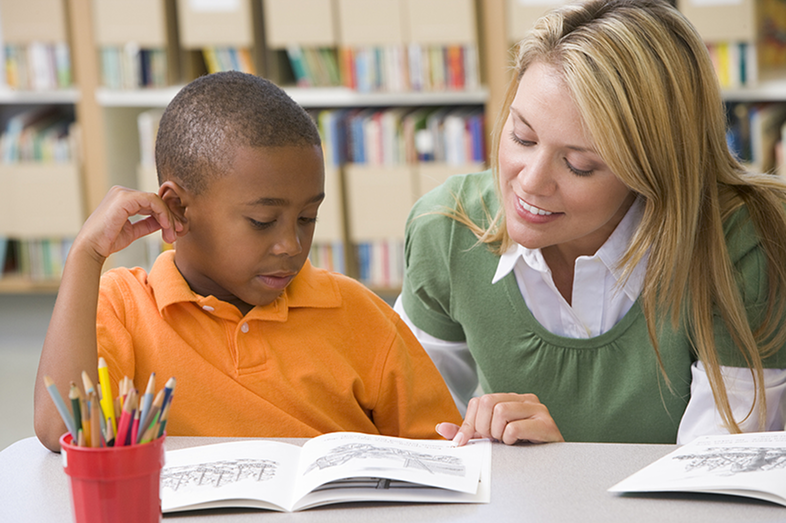
Photo credit: Monkeybusinessimages/Bigstock
“There’s nothing about us without us.” Here is a guide to writing about students who experience learning differences.
Photo credit: Monkeybusinessimages/Bigstock
There is one facet of K-12 education that doesn’t get much media spotlight: learning disabilities and differences in the classroom.
Few reporters on the education beat are consistently telling stories about student learning differences on an individual level. While reporters and editors are busy covering breaking news amid federal changes to education and local issues, taking extra time to research, report and understand students’ strengths and challenges is key to illustrating how policy changes and access issues affect them.
As of 2017, 1 in 5 children have a learning difference or disability in the United States. Additionally, 2.4 million children identify with having a specific learning disorder, such as dyslexia, dyscalculia and dysgraphia, according to the National Center for Learning Disabilities. Such conditions, including ADHD and Autism Spectrum Disorder, all fall under the neurodivergence umbrella.
Neurodivergence relates to having a condition in which the brain processes or develops information in a way that is not considered to be typical, or neurotypical, according to Northwestern Medicine.
Lawrence Fung said he’s helping his students understand the experiences of neurodivergent people as a whole. Fung is an associate professor of psychiatry and behavioral sciences, with a clinical focus on child and adolescent psychiatry, at Stanford University.
“I think journalists should be talking about the experience of neurodivergent people that have different brains, that they contribute to society in a different way,” Fung said.
Additionally, students with learning disabilities shouldn’t be lumped into one category in the media because two students with the same diagnosis can have entirely different experiences, according to Fung and other experts.
This guide will help reporters improve their coverage of learning differences, but several of these tips can be applied to people with other disabilities, too, which may be physical, emotional or intellectual.
Before labeling a student – or any source – as having a learning disorder or disability, it’s important that, as the journalist, you ask them how they would like to be labeled in a story, said s.e. smith, a disabled freelance journalist whose name spelling preference is lowercase letters. smith is co-founder of The Flytrap, a feminist media collective and newsletter.
“I think it’s also really important to use the labels that people specify for themselves,” smith said. “Within the community, there’s a lot of debate on how we describe ourselves, and so I always defer to the way someone likes to be described.”
When covering a story that involves disability of any kind, smith said reporters should talk to disabled experts and researchers: “There’s a common situation where nondisabled people talk over us or assert that they know things that they do not.”
And never assume how a source would want to be identified.
“If you’re interviewing a professor, you’re going to say, ‘What’s your name; what are your pronouns; what is your academic affiliation? How would you like me to introduce you in the story?’ So you treat disabled sources the same way,” smith said.
It’s important to only include someone’s disability or label when it’s relevant to the story you’re telling, smith said.
“For example, if you are interviewing an early childhood educator who assists people with IEPs [Individualized Education Programs] and is also disabled, that might be a useful thing to reference if they consent to that,” smith explained. “If not, then don’t label them, and otherwise, [only include it] when the disability is contextual to the story.”
Many people positively embrace their learning differences and don’t want the words “disorder” or “disability” to be a part of their identities, according to Fung.
“Do you call that a disability? Do you call that a disorder when it’s actually genius working?” Fung said.
Experts said while some students may have a learning disability diagnosis, every student learns differently, and for some, the label only marks a difference in how they learn.
Evie A. Malaia, associate professor in the department of communicative disorders at The University of Alabama, said in her field, something is only called a disorder when it interferes with someone’s quality of life, which is determined by a variety of external factors.
“Sometimes it’s beneficial to call a difference a disorder to make sure that the kid can take their time to develop and figure out their own strategies,” Malaia said.
A child only has access to their own brain, Malaia said, so they aren’t competing with anyone else or understanding how someone else’s brain works, which means using the word “disorder” can feel “labeling.”
Take time to understand the medical model of disability, which sees people as disabled by a condition or disorder, vs. the social model of disability, which views disability as created by environmental and social barriers.
Understanding disability as a social construction is an important part of this, too, said Deni Elliot, professor emeritus and former Eleanor Poynter Jamison chair in media ethics and press policy at the University of South Florida.
“Whether we refer to an individual as disabled, or whether we refer to lack of access because they can’t climb the steps to get into the classroom and there’s no elevator, or they can’t get an audio book that will help them with textual reading problems, that’s not a disability,” she explained. “That’s a problem of the community in which we live, and that makes it a social construction.”
While understanding the definitions of each learning difference is important, two students who have the same diagnosis likely experience it very differently, experts said.
With all conditions, the spectrum is wide, Fung said, which is why it’s important not to put all students with learning differences or disabilities into the same category.
These are the most common learning differences, according to Fung:
Autism Spectrum Disorder, or ASD, is not categorized as a learning disability, Fung said, but autistic students might have an IEP, so autism might still be relevant in the classroom.
Autistic students might need an IEP for social, emotional, or communication differences, which could sometimes make learning hard for them, Fung said. Sensory processing disorders are part of the nonsocial criteria of autism, he explained, which is common and could also impact a student’s learning.
Fung also pointed out that some autistic people are intellectually gifted and are passionate about their interests; some may not have an interest in learning, and some may have a learning disability or are non-speaking.
“Autism Spectrum Disorder is a spectrum. So basically, a lot of people are not really appreciating that there is really no stereotypes,” Fung said. “There are actually many different presentations that can be representing autism.”
There is sometimes a tendency in stories to objectify people with disabilities, Elliot said. So understanding why you’re telling the story in the first place is where you should start, she advised.
If you’re writing about something a disabled person accomplished and frame it as something amazing, like graduating high school, for example, this can stereotype disabled students “as subhuman, as not quite good enough,” said Elliot, who is also the author of the memoir, “Catching Sight: How a Guide Dog Helped Me See Myself,” which comes out June 16, 2026.
Additionally, when covering students who have certain conditions, Fung said readers want to know:
Person-first language puts the person before their lived experiences, and identify-first language puts a person’s identity first.
Examples:
Person-first language:
Identity-first language:
Ask your sources if they prefer to be identified with person-first or identity-first language, smith advised; each person might have a different preference.
The Disability Language Style Guide from the National Center for Disability and Journalism at Arizona State University is offered in English, Spanish, Italian and Romanian, and it was last updated in summer 2021. It provides a breadth of definitions, guidelines and preferences for journalists covering disabilities.
The center also has a list of 33 subject matter experts for journalists to consult or contact for stories. The list includes Elliot.
It’s not always possible to interview youth under age 18 without their parents’ permission. But when it is possible, including them is important, Elliot said.
“There is a saying in various parts of the disability community that is: ‘Nothing about us without us,’” she said.
When interviewing parents, smith said to ask them about the perspective of their children or about what they hear from their kids, especially when parents don’t want their child to be interviewed.
“There’s a really problematic and long history of parents of disabled children talking over their children,” smith said.
And when you aren’t able to interview the child, Elliot said there are other people reporters should talk to.
“If the idea is that you’re writing about learning differences and or disabilities and children who are too young, let’s say, to participate meaningfully in the conversation with the journalist, then I think that it’s important to include sources for the story who are representative of people with the differences or disabilities in the community,” Elliot explained.
Both the Disability Language Style Guide and the AP Style Guide caution against using the phrase “special education.” Instead, they advise describing the services or needs in specifics.
smith advised asking students or their parents how their education is referred to in their schools or districts. Sometimes you will need to use the phrase “special education” if it’s part of the school or program name, so readers understand what you’re talking about.
“There’s kind of this narrative that either disabled kids can’t keep up or require a lot of work from the teacher, or disrupt other children,” smith said. “And I think it’s really good to push back on those narratives.”


Your post will be on the website shortly.
We will get back to you shortly